Creating Gold text.
03 Wednesday Oct 2012
Posted in Composition, Photoshop, Typograpghy, Typography, Typography

03 Wednesday Oct 2012
Posted in Composition, Photoshop, Typograpghy, Typography, Typography
17 Monday Sep 2012
Posted in General, Photo compositing, Photoshop
3D Buzz is happy to announce that the Photoshop CS6 Fundamentals class that was made freely available to the general public is now available for download… free to all!
You can find the download links here:
http://www.3dbuzz.com/vbforum/showthread.php?193870
I’ll be going through these, you can never know enough.
08 Saturday Sep 2012
Posted in Book Cover Design, Composition, golden ratio, The Rule of Thirds
Tags
book cover, cd cover, composition, Cover Art, Cover design, design, golden ratio, Keith Draws, kindle
This is a very simple template that can enhance your layout substantially.
It can be used on any format and it can also be broken down into further thirds sections, but more of that later. First lets look at the template when applied to a standard 6 x 9 book cover.
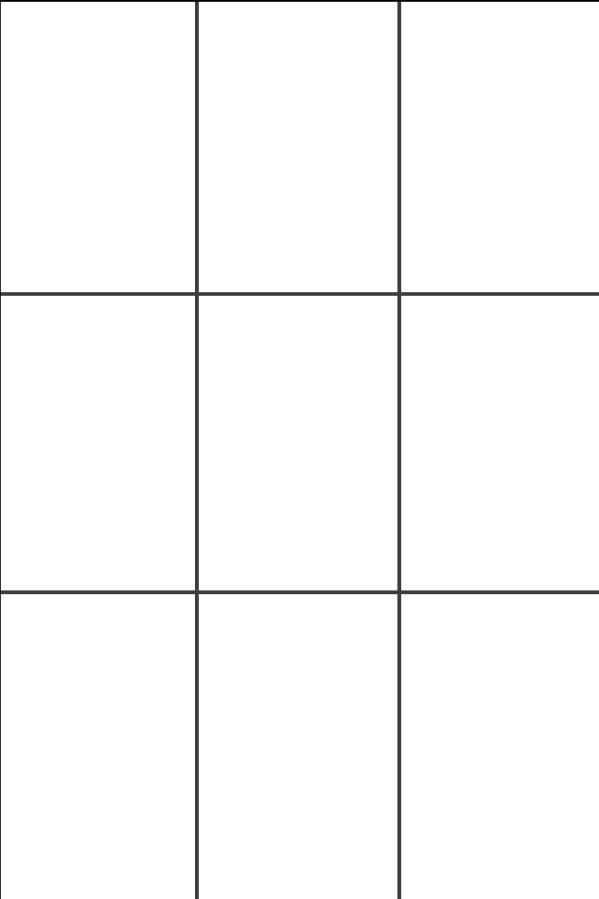
Standard 6×9 book, “thirds” grid.
The rule of thirds was first written down by John Thomas Smith in 1797. In his book Remarks on Rural Scenery, Smith quotes a 1783 work by Sir Joshua Reynolds, in which Reynolds discusses, in unquantified terms, the balance of dark and light in a painting. Smith then continues with an expansion on the idea, naming it the ‘Rule of thirds’:
Two distinct, equal lights, should never appear in the same picture: One should be principal, and the rest sub-ordinate, both in dimension and degree: Unequal parts and gradations lead the attention easily from part to part, while parts of equal appearance hold it awkwardly suspended, as if unable to determine which of those parts is to be considered as the subordinate. “And to give the utmost force and solidity to your work, some part of the picture should be as light, and some as dark as possible: These two extremes are then to be harmonized and reconciled to each other. (Reynolds’ Annot. On Du Fresnoy.)
Analogous to this “Rule of thirds”, (if I may be allowed so to call it) I have presumed to think that, in connecting or in breaking the various lines of a picture, it would likewise be a good rule to do it, in general, by a similar scheme of proportion; for example, in a design of landscape, to determine the sky at about two-thirds ; or else at about one-third, so that the material objects might occupy the other two : Again, two thirds of one element, (as of water) to one third of another element (as of land); and then both together to make but one third of the picture, of which the two other thirds should go for the sky and aerial perspectives. This rule would likewise apply in breaking a length of wall, or any other too great continuation of line that it may be found necessary to break by crossing or hiding it with some other object : In short, in applying this invention, generally speaking, or to any other case, whether of light, shade, form, or color, I have found the ratio of about two thirds to one third, or of one to two, a much better and more harmonizing proportion, than the precise formal half, the two-far-extending four fifths and, in short, than any other proportion whatever. I should think myself honored by the opinion of any gentleman on this point; but until I shall by better informed, shall conclude this general proportion of two and one to be the most pictoresque medium in all cases of breaking or otherwise qualifying straight lines and masses and groupes , as is agreed to be the most beautiful, (or, in other words, the most pictoresque) medium of curves
Source: http://en.wikipedia.org/wiki/Rule_of_thirds
Basically what he’s saying is only have one center of focus and everything else in the image should serve to complement it and guide the eye toward it. Using this grid should help an artist (you in this case) balance the image. I’ll talk about color and contrast in more detail in a later post.
That’s easily said, even using this grid to create a balanced and pleasing image is not always as easy as it sounds so its always worth experimenting with it.
I’ve created some simple layouts guides to help you in some small way, I recommend you experiment further:
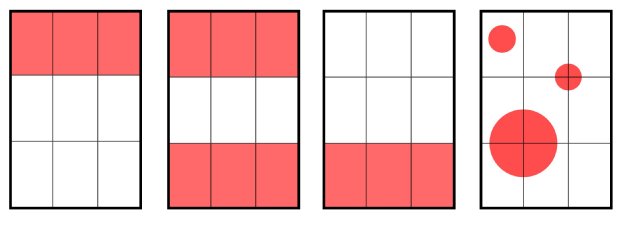
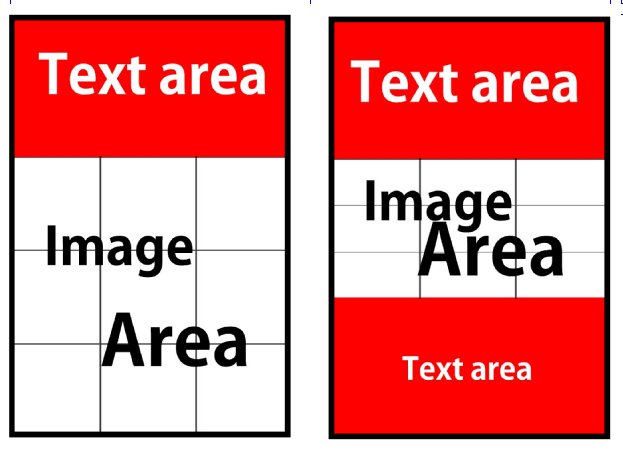
Remember earlier when I said: “ it can also be broken down into further thirds sections”
Here are a couple of examples of that:
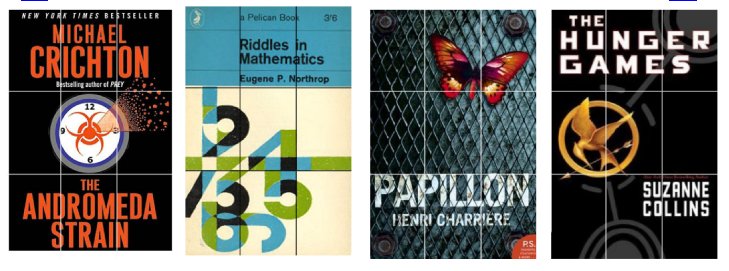
 And now here are a few examples of actual books with the rule of thirds applied on the cover:
It’s also possible to adapt the Golden Ratio into a 9 section grid for your cover. You simply take four Golden rectangles and overlay them as shown below:
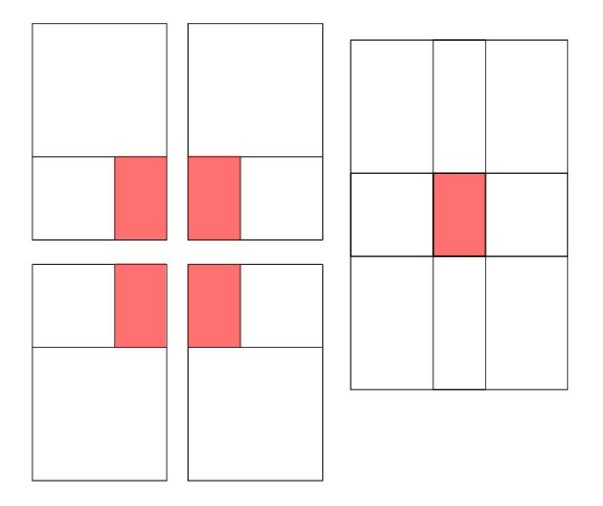 I actually prefer it to the standard “Rule of Thirds” and I’m working on a cover using this format right now, so I’ll post it as soon as its done showing you some of the design decisions I was faced with when I produced it. I’ll talk about color and contrast in more detail in a later post.
Finally, I’m giving you a photoshop template at the correct resolution for a 6 x 9 book including bleed with overlays for both of these grids. It’s 450 DPI at actual size and includes 3mm bleed. It also includes a template for the Kindle cover format which is 1.6 and slightly different to the 6×9 cover. Right-click the link to save and Download here:
Okay, I think that’s it for now, I hope this is helpful to you.
03 Monday Sep 2012
Posted in Photo compositing, Photoshop
Tags
book cover, cd cover, Cover Art, Cover design, illustration, Keith Draws, kindle, layout, Photo compositiing
This Video is great for a beginner, to learn some basic techniques in photo compositing. Though it’s not mentioned in here I also recommend you get used to working at a minimum of 450 dpi at actual size. When your work is printed it will usually be at 300 dpi, so you will be working at a higher resolution. This is standard practice, and means that you work will be reduced in size when it’s finally printed. The reduction will improve the quality.
02 Sunday Sep 2012
Posted in Book Cover Design, golden ratio, Typography
Tags
book cover, cd cover, composition, Cover Art, design, golden ratio, illustration, kindle, layout, typography
There is a lot of mystical talk about the Golden Ratio:
The Golden Ratio is also known as the Golden Mean, Phi, or Divine Proportion, this law was made famous by Leonardo Fibonacci around 1200 A.D. He noticed that there was an absolute ratio that appears often throughout nature, a sort of design that is universally efficient in living things and pleasing to the human eye. Hence, the “divine proportion” nickname.
source: digital-photography-school.com

But we are not really concerned with all the mysticism and math here: We are simply concerned with how to make a good cover design. So how does it concern us? Well if you divide the imagery up on your cover using this method you end up with a very pleasing and well balanced image.
The Grid looks like this:
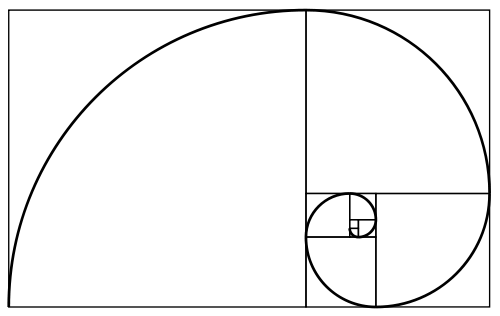
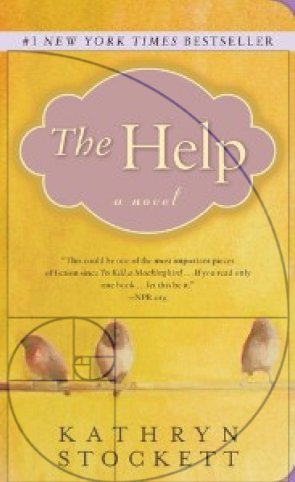 And If you want some evidence of just how well it works:
The cover for “The Help” by Kathryn Stockett looks like it was designed using this principle and according to USA today it was the number one selling book of 2011. Of course, that may have a little to do with the writing as well, but that cover really did grab the attention of potential readers.
A golden rectangle can be drawn out using a straightedge and a compass like this (see below):
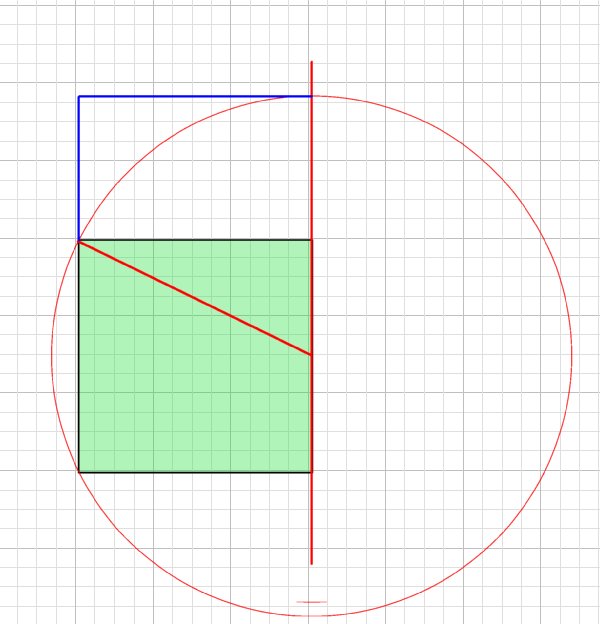
You can use the grid anyway round you like, horizontally, vertically, flipped and even in multiples at angles as it is seen in the sunflower. Of course, I recommend keeping things simple, it’s less risky.
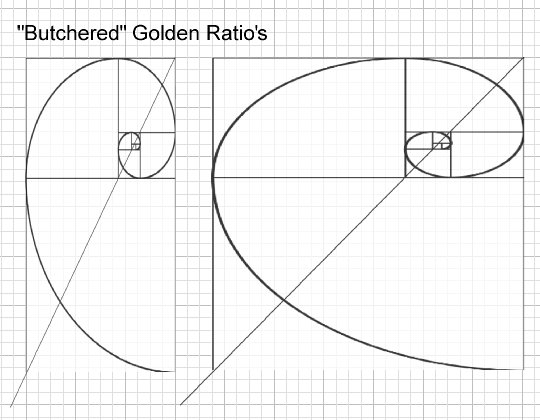
The next thing to consider is the proportions of your cover. A paperback book cover, though close, is not quite of the same proportions as the Golden Rectangle. But this doesn’t mean you can’t use it. In the diagram below the green area represents a standard Kindle book cover, and I’ve shown two possible alternative uses of the format. One is scaled down proportionally (as on the cover of “The Help”) and another is scaled vertically in order to use all the books space, this I will call a “Butchered” Golden Rectangle. It still leads to good quality composition, but it’s not quite as aesthetically pleasing.
The same thing applies to CD covers, though the square format is very different making things slightly more problematic as can be seen in the diagrams below.

If you are wondering why this particular compositional model is so appealing, well there are many theories, but nothing is confirmed. Personally, I think its got a lot to do with the subconscious human skill of detecting patterns, and the more perfect the pattern the more we like it.
That said, imperfect patterns such as a “Butchered” Golden Ratio still appeal because they do have internal consistency and a detectable pattern.
Here you can see how I’ve used the Golden Ratio on a recent book cover. I kept it in proportion matching the width of the book but allowing it to bleed just a little above and below the page. Look at the key elements of the cover. The typography; and how the focus is drawn into the word “Rebirth” The way the eye is bisected between the first square and second golden rectangle, the way the beard, nose, and brow follow the curve of the spiral. The way the front edge of the base of the ear bisects the central square, and so on. I’m sure you can spot much more.

Its also possible to use the Golden ratio in your Typography (i.e. with your fonts and text layout) not only on the cover but actually in your book and there is a great blog piece by Chris Pearson about just that right here: http://www.pearsonified.com/2011/12/golden-ratio-typography.php
I’m going to continue to explore all the other compositional grids, methods and techniques in future posts and with a bit of luck by the end of it all we will all be better cover designers.
If you enjoyed this article and perhaps found some help in here I’d appreciate a Facebook “share” and or “like” and one in as many other social networks as you can bring yourself to click on.
And finally back to the mysticism.
 keithdraws